The Best AWS Lightsail Alternative for Developers in 2026
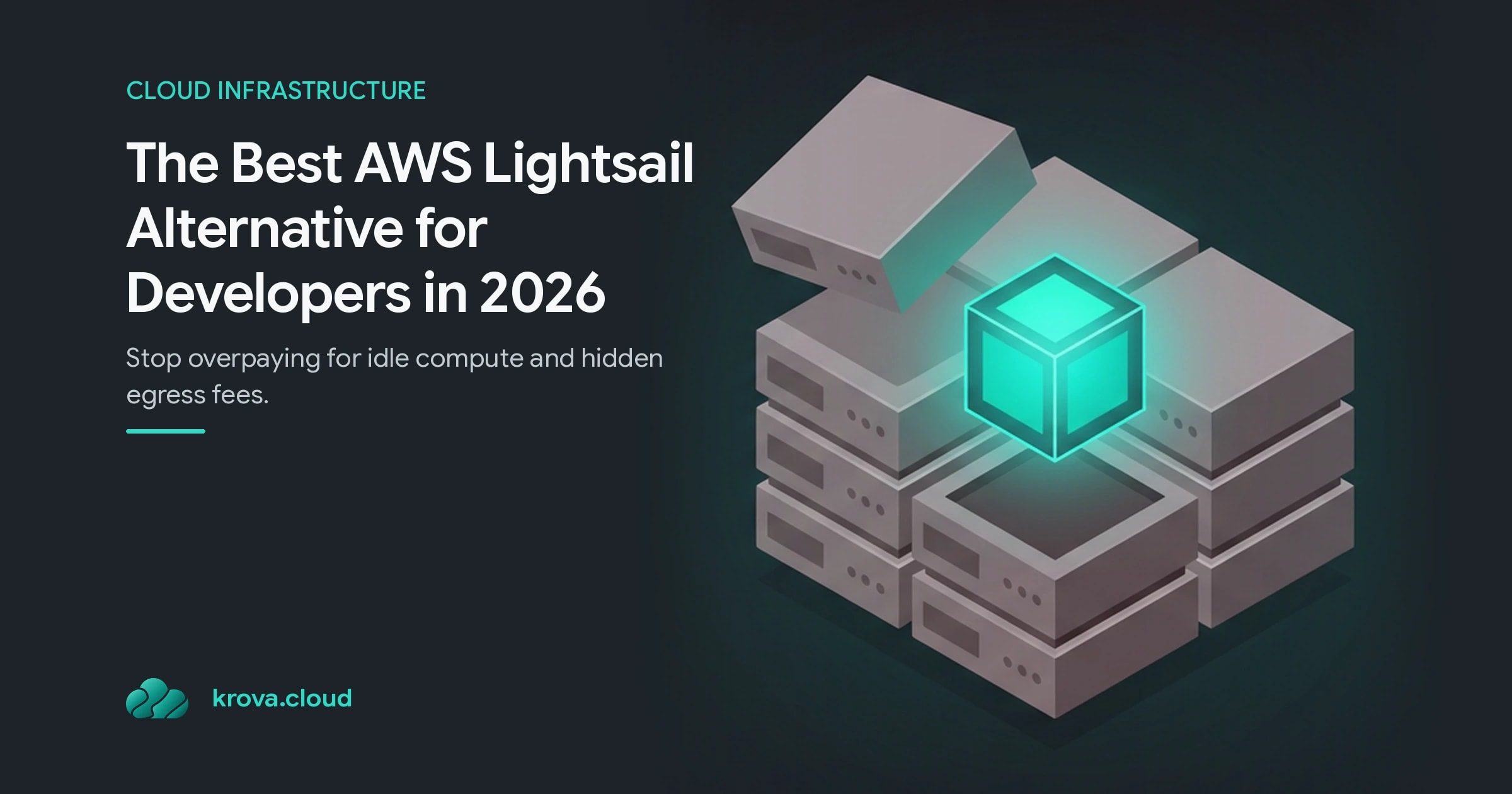
Stop overpaying for idle compute and hidden egress fees. Compare the top AWS Lightsail alternatives for AI sandboxes, microVMs, and standard VPS hosting.
 DM
DMLast updated
AWS Lightsail seems like a safe bet until you ship a production application. You launch a small bundle, process spiky AI workloads, and suddenly your bill reflects the painful reality of AWS egress fees. If you are tired of unpredictable invoices and rigid virtual machines, finding a reliable aws lightsail alternative is your best path to lowering cloud expenses. Here is what actually makes sense for modern infrastructure.
TL;DR:
- Hetzner wins on raw compute value if you have the time to manage your own Linux servers.
- Vultr and DanubeData are predictable flat-rate options for traditional shared-kernel deployments.
- Northflank is a top pick for isolated microVMs, ideal for persistent AI sandboxes and ephemeral developer environments.
- Egress fees matter. Moving off AWS frees up budget, and some estimates suggest you can cut compute bills by up to 60 percent depending on your outbound traffic profile.
What Is an AWS Lightsail Alternative?
AWS Lightsail is Amazon's simplified virtual private server (VPS) product. It bundles compute, storage, and networking into a fixed monthly price with pre-configured blueprints for basic stacks like Node.js. It acts as an easy on-ramp to the AWS ecosystem.
An aws lightsail alternative is a cloud provider delivering raw compute without Amazon's complex billing ecosystem. Developers usually look for aws lightsail competitors when they hit a bandwidth wall. AWS metering gets expensive fast. Performance is another trigger. A standard shared-kernel virtual machine boots too slowly for ephemeral continuous integration environments or dynamic AI agent sandboxes.
Modern alternatives let you pay closer to your actual utilization. You secure the simplicity Lightsail promises, but with faster hardware and better architectural choices for multi-tenant applications.
Where the Real Savings Hide (And Why People Leave AWS)
Chasing a cheap server is rarely about the sticker price on the homepage. The real cost hides in the fees stacked behind the compute instance.
If you run an API pushing heavy outbound data, AWS egress fees significantly inflate your baseline instance costs. Data transfer is a silent budget killer. On flat-rate providers, generous transfer allowances mean you pay close to nothing extra for that exact same traffic.
European-headquartered providers frequently offer 6 to 10 times more bundled traffic and significantly more RAM per dollar, with no CPU credit throttling. Start small and portable. Spin up the cheapest instance that fits your specifications, run your real workload for a week, and watch the actual bill settle before you commit your infrastructure.
VPS vs MicroVM: Choosing Your Isolation Model
People often compare providers based solely on CPU and RAM, ignoring the underlying virtualization technology. The vps vs microvm debate is critical if you run multi-tenant applications or AI agents.
Traditional VPS providers use shared kernels. This architecture works fine for hosting a static web application. However, AI agents running untrusted code require hardware-enforced isolation. Standard containers leave you vulnerable because a single kernel exploit can compromise the host.
MicroVMs give every single workload its own dedicated Linux kernel. Technologies like Firecracker provide the strict security boundary of a full virtual machine with the startup speed of a lightweight container.
Prototyping an AI agent on a standard VPS feels fast at first. Production workloads, however, require persistent state, fast resume times, and co-located hosting that cuts network overhead. As noted in recent sandbox environment comparisons, workloads that execute user-submitted code will eventually break under real concurrency limits unless you deploy them inside properly isolated microVMs.
The Top Developer Cloud Platforms Compared
The market for a developer cloud platform has fragmented based on exactly how much operational work you want to own.
Hetzner Hetzner is a recognized value champion for raw compute. You get massive amounts of RAM for a fraction of the price of legacy clouds. The catch is entirely on your shoulders. You manage the security, updates, and server configuration yourself.
Vultr and DanubeData These providers represent the predictable middle ground. Vultr offers a highly scalable environment with an impressive global footprint. DanubeData is a strong European alternative offering massive traffic bundles and managed database services at a fraction of AWS prices. Both are excellent choices for a standard Linux deployment where you want reliable uptime without the AWS premium.
Northflank and MicroVM Environments If you need an aws lightsail alternative built for modern, ephemeral workloads, platforms like Northflank support both persistent and ephemeral sandboxes using microVM isolation. Resources are reserved securely, meaning your instances are properly partitioned. Comparing Krova Cloud vs AWS Lightsail illustrates how alternative architectures and billing models reduce costs for bursty AI workloads. MicroVM environments boot quickly with their own Linux kernels, making them ideal for untrusted code execution.
FAQ
What Is the Best AWS Lightsail Alternative in 2026?
It depends on your requirements. Hetzner wins on raw price if you are comfortable with manual server management. DanubeData and Vultr are excellent for standard managed hosting with high bandwidth. Northflank is the ideal choice if you want highly secure, fast-booting microVMs.
Which Cloud Is Easiest for Beginners?
Vultr and DanubeData are straightforward platforms with clean interfaces and deep documentation. Lightsail masks most of Amazon's complexity behind fixed monthly bundles, but the lock-in happens quickly once you scale.
Are microVMs a Viable Alternative to Standard VPS?
Yes. MicroVMs give each workload its own isolated kernel. They boot fast enough to handle serverless or bursty AI traffic while providing the strict security of a traditional virtual machine.
Outgrown AWS Lightsail? Try Krova.
Get the simplicity you wanted from Lightsail by spinning up Firecracker microVMs in seconds with zero Kubernetes overhead.